
FULL OUTER JOIN
4. FULL OUTER JOIN
Section titled “4. FULL OUTER JOIN”What it does
Section titled “What it does”Returns all rows from both tables. Where there is no match on either side, the missing columns are NULL. It is the union of LEFT JOIN and RIGHT JOIN.
Visual Diagram
Section titled “Visual Diagram”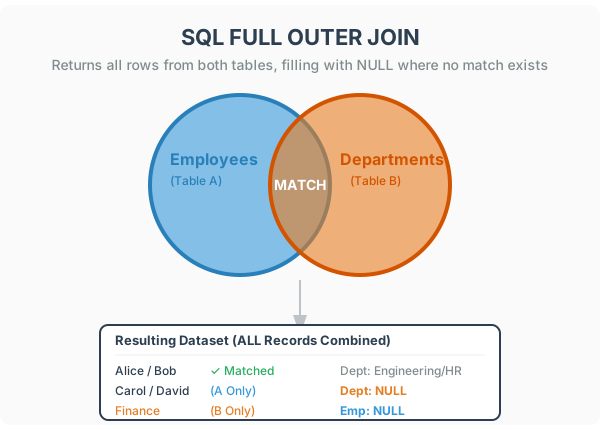
SQL (Standard — PostgreSQL, SQL Server, Oracle)
Section titled “SQL (Standard — PostgreSQL, SQL Server, Oracle)”SELECT e.name, d.dept_nameFROM employees eFULL OUTER JOIN departments d ON e.dept_id = d.dept_id;SQL (MySQL workaround — MySQL does not support FULL OUTER JOIN)
Section titled “SQL (MySQL workaround — MySQL does not support FULL OUTER JOIN)”SELECT e.name, d.dept_nameFROM employees eLEFT JOIN departments d ON e.dept_id = d.dept_id
UNION
SELECT e.name, d.dept_nameFROM employees eRIGHT JOIN departments d ON e.dept_id = d.dept_id;
UNION(withoutALL) deduplicates rows, so matching rows (Alice, Bob) appear only once.
Result
Section titled “Result”| name | dept_name |
|---|---|
| Alice | Engineering |
| Bob | Marketing |
| Carol | NULL |
| David | NULL |
| NULL | Finance |
When to use FULL OUTER JOIN
Section titled “When to use FULL OUTER JOIN”Use it when doing data reconciliation — finding rows that exist in one source but not the other. Adding a WHERE clause makes it a powerful mismatch detector:
-- Find employees with no department AND departments with no employeesSELECT e.name, d.dept_nameFROM employees eFULL OUTER JOIN departments d ON e.dept_id = d.dept_idWHERE e.dept_id IS NULL OR d.dept_id IS NULL;