
INNER JOIN
1. INNER JOIN
Section titled “1. INNER JOIN”What it does
Section titled “What it does”Returns only the rows where a match exists in both tables. Any row in either table that has no matching row in the other table is completely dropped from the result.
Think of it as the strictest join — it requires both sides to agree.
Visual Diagram
Section titled “Visual Diagram”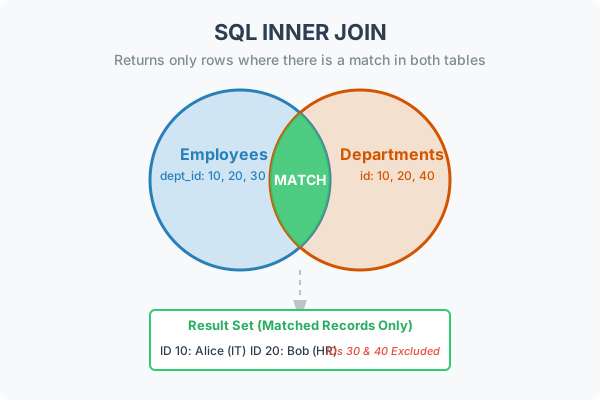
SELECT e.name, d.dept_nameFROM employees eINNER JOIN departments d ON e.dept_id = d.dept_id;Result
Section titled “Result”| name | dept_name |
|---|---|
| Alice | Engineering |
| Bob | Marketing |
Why Carol and David are excluded
Section titled “Why Carol and David are excluded”- Carol: her
dept_idisNULL. In SQL,NULL = 1is notTRUE— it isUNKNOWN. TheONclause requiresTRUE, so Carol never matches any department row. - David: his
dept_id = 4, but no row in the departments table hasdept_id = 4. No match → excluded. - Finance (dept_id 3): no employee has
dept_id = 3. No match → excluded from the result.
When to use INNER JOIN
Section titled “When to use INNER JOIN”Use it when you only care about records that have complete data on both sides — e.g., orders with valid customers, employees with valid departments.